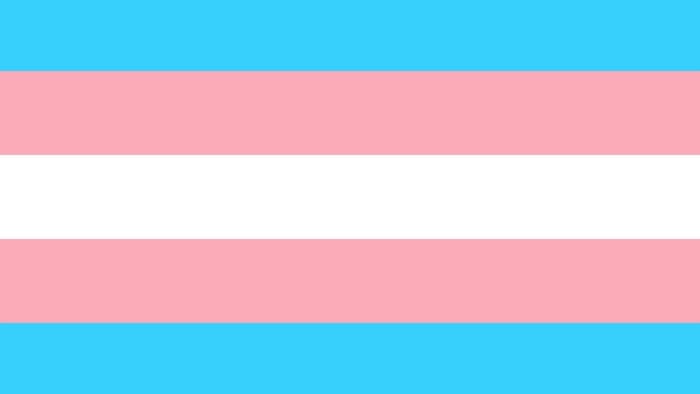
Britain’s New Voter ID Law: What Trans And Non-Binary People Need To Know
March 28, 2023The UK’s new voting card law has raised fears transgender and non-binary people could be disenfranchised – but there are ways to cast your vote without photo ID.
Beginning with the local elections in May, all voters will be required to show photo ID before receiving their ballot.
The Conservative government says the new law will protect the “integrity” of the elections and prevent voter fraud. However, as ‘UK Daily News’ write, there are widespread concerns that trans and non-binary people may be discouraged or prevented from exercising their democratic rights.
Image Credit: Pixabay
Polling station staff review voter photos and ensure the name on the ID matches that on the voter roll.
While gender identifiers are irrelevant for voter identification purposes, the law prohibits people from casting their ballots if the officer believes there is “reasonable doubt” that the person is not who they claim is on their Basis based photo ID.
Justin Mahboubian-Jones, Community Engagement Manager at LGBT HERO, says the vague language used is disturbing.
“This phrase ‘reasonable doubt’ is not made clear in the rest of the electoral law,” he said in an interview.
“So when we’re talking about trans people and people whose gender expression is either changing, is fluid, or maybe doesn’t match what’s on their ID, it’s unclear if anyone — be it the polling station, the chairperson, the person in charge at the polling station — would.” consider this to be sufficient to have reasonable doubts about your photo.
“There are clear guidelines as to what accepted changes there are to photographs for something like a passport in relation to your travel validity – but not in the case of election photo ID.”
There are concerns that many may not even make it to the polling station, either because they don’t have valid ID or because they don’t feel comfortable presenting it. Accepted forms of ID include a passport, driver’s license (full or temporary), biometric immigration document, or a PASS card.
According to a 2021 report by Stonewall and the LGBT Foundation, LGBTQ+ people are three times more likely to be without a usable photo ID than the general population (12 percent and 4 percent, respectively).
Almost a quarter (24 percent) of trans people and one in five (19 percent) non-binary people who took part in the survey said they were not.
Additionally, 39 percent of queer people said they were less likely to vote if required to show ID — this rose to more than half of trans people and nonbinary people (55 percent and 52 percent, respectively).
Craig Westwood, director of communications, policy and research at the Election Commission, says people may have concerns “whether the photo ID looks like them at the moment or about gender characteristics.”
“People at the polling stations will not check these, but I could understand that people might have concerns about this,” he said in an interview.
Aside from the new ID requirement, Westwood says the voting process will be mostly the same: Staff will ask for a name and address before verifying a voter’s ID, as usual. You should not check gender marking, address or nationality on ID cards.
“There is an opportunity, if people have concerns about their identity and having it verified in a public setting, to have it verified in a private area at polling stations,” notes Westwood.
For those who are uncomfortable with their current ID or who do not have acceptable ID, there is an option to apply to the government for a free Voting Eligibility Certificate. The deadline for applying for this card is April 25th.
Citizens do not have to state their gender when applying for a voter card, but they must submit the application using the same name they used to register to vote.
LGBT HERO has gone straight to the community over the past month to conduct voter ID drop-ins, some of which are specifically geared towards meetings with trans and non-binary groups. Mahboubian-Jones says people were excited to get involved.
“There are many ways we can get involved in the political sphere and in the social sphere in the form of demonstrations and protests,” he says. “Voting is an absolutely vital way to bring about the change you want to see in the world, regardless of your opinions, regardless of what that change is.”
“As a group of people who have been, and still are, disenfranchised in the past and facing a multitude of issues – trans people are facing an absolute wave of issues, from their civil rights to healthcare – to be able to Raising your voice and saying ‘this is who I vote’ is a fundamental way of participating in society.
“Not being able to do that because you weren’t aware of the changes is more than just a shame. It shouldn’t happen.”
The local elections in England in May will be the first time that ID will be compulsory in England, Scotland or Wales. It is already a requirement in all elections in Northern Ireland.
LGBTQ+ people who cannot make it to the polling station, do not have acceptable voter ID, or do not feel comfortable voting in person on May 4 can still apply to vote by mail.
They can also request that someone else vote on their behalf; this is referred to as proxy voting.
The deadline for registering to vote ends on April 17 at midnight and the deadline for applying for postal voting ends on April 18. Individuals wishing to register for proxy voting have until April 25.
MPs, civil rights groups, unions and charities have questioned the rationale for the Voter ID Act given the low level of voter fraud. Labor MP Cat Smith previously likened the far-reaching changes to US Republican-style “voter suppression”.
Of the millions of votes cast in 2021, only 315 allegations of voter fraud were investigated by the police, according to the electoral commission. None of these cases resulted in a conviction.
Read related myGwork articles here:
US Voter ID Laws Could Stop Trans People From Voting
Scottish Government Right To Allow Trans Self-ID In Census Question, Court Rules
Hong Kong’s Top Court Rules For Trans Activists in ID Case
Keep up to date with the latest myGnews
Sign up to mygwork
________
LGBTQ+ professionals, LGBTQ+ Graduates, LGBTQ+ professional network, LGBTQ+ professional events, LGBTQ+ networking events, LGBTQ+ Recruitment, LGBTQ+ Friendly organisations, LGBTQ+ Friendly companies, LGBTQ+ jobs